Truth About Dyslexia podcast
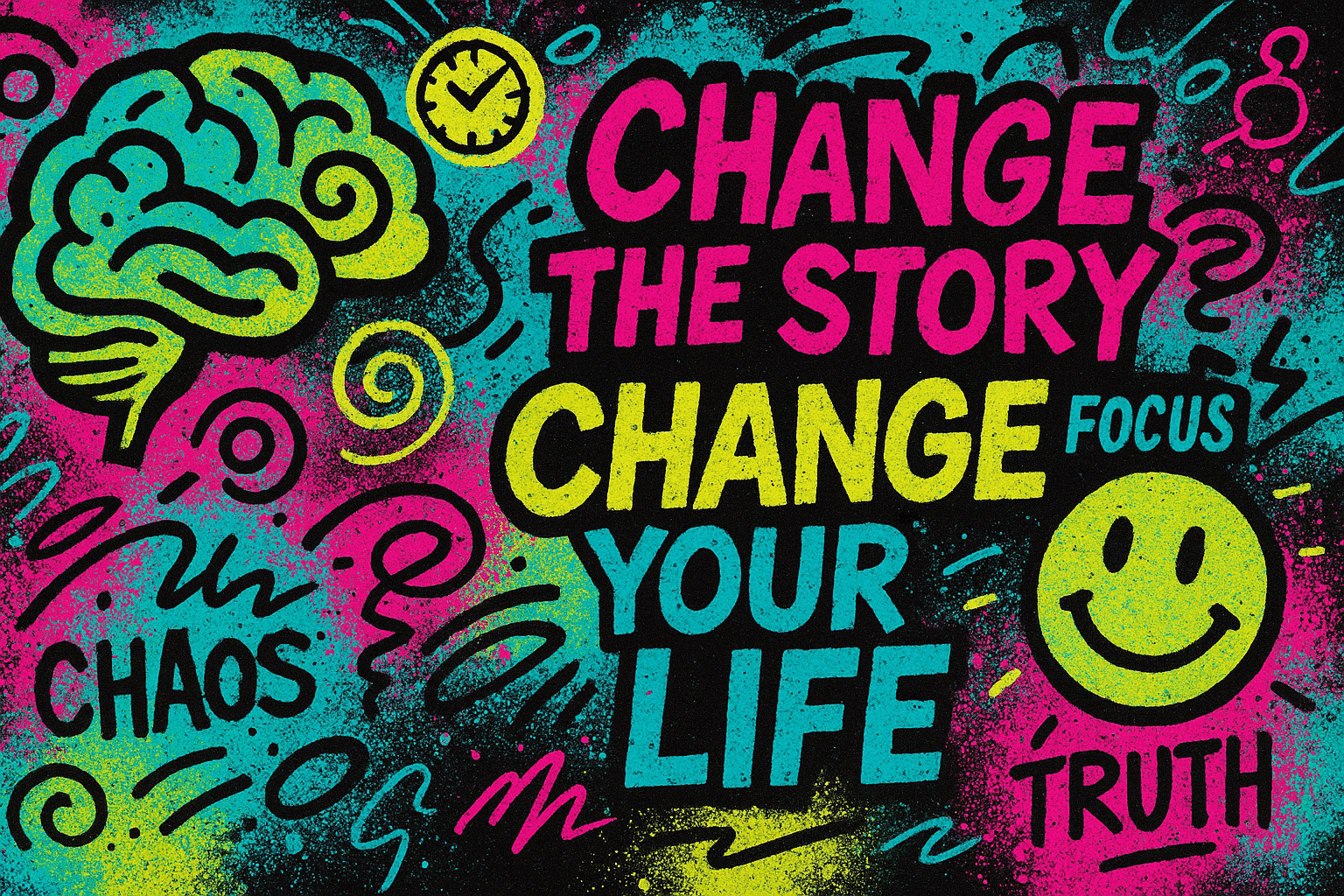
Change The Story Change Your Life
Some days our imaginations run wild. That’s one of the biggest strengths of a dyslexic brain, and it’s also what can trip us up. In the latest episode of the podcast, I shared a personal story about how my mind spun a tale that left me worried over nothing. Dyslexia can be a mixed bag....
Listen to this episode
Change The Story Change Your Life
Follow the podcast and keep the next episode close.


Some days our imaginations run wild. That’s one of the biggest strengths of a dyslexic brain, and it’s also what can trip us up. In the latest episode of the podcast, I shared a personal story about how my mind spun a tale that left me worried over nothing.
Dyslexia can be a mixed bag. On one hand, we’re amazing at thinking in images and coming up with inventive ideas. On the other, we can get tangled in our own plots and anxieties. In the episode, I talk about noticing a moment where my internal storyteller built up a dramatic scenario - and how I reined it in.
Why Our Dyslexic Brains Love Telling Stories
Our minds are wired to process ideas visually. We rarely see the world as plain text. Instead, we picture entire scenes, characters, and outcomes. This visual thinking can be a superpower when we’re brainstorming or problem-solving.
What’s interesting is how our brains fill in gaps. We don’t always stick to the facts. It’s easy to jump from a small moment to a huge conclusion. Sometimes it’s good, especially when we use that creative spark to connect the dots in a clever way. But it’s also easy to get sucked into a story that isn’t true.
We don’t have to turn off that creativity. It’s about guiding it, so it helps us rather than burdens us. The more we understand this process, the more we can use it to our advantage in daily life.
When Storytelling Turns Negative
It’s lovely when we build happy stories. But when our stories shift to worry or doubt, it can spirals us into anxious thinking. We start to question ourselves and imagine failure or conflict, sometimes without any real proof.
As mentioned in the episode, I caught myself in a moment of panic, believing an entire chain of events that almost felt real. It was so vivid in my mind. That’s when I realised I needed to step back and remind myself of the facts.
“I suddenly noticed my brain weaving an entire saga about something that might never happen.”
This quote from the podcast shows just how sneaky our imaginations can be. One moment we’re fine, the next we’ve convinced ourselves that disaster is looming. If you’ve ever felt a pit in your stomach from a story you created, you’ll recognise that feeling.
Spotting Unhelpful Narratives
Recognising when our internal narrator takes a wrong turn is a vital skill. We don’t always catch it early, but there are clues that can help, like feeling sudden anxiety over a future event or replaying negative scenarios in our head.
Here’s what to watch out for:
- Heightened emotion: Feeling a strong wave of fear, anger, or stress out of nowhere.
- Catastrophic thinking: Immediately imagining the worst possible outcome.
- Repetitive loops: Going over the same ‘what if’ thoughts again and again.
- Physical signs: Tense neck, clenched jaw, or tightness in your chest.
These signs don’t always mean your story is wrong. Sometimes the risk is real. But often it’s our brain writing a drama without a solid basis in reality. The key is pausing to see if we’ve jumped too far ahead.
Rewriting the Script
Once you notice your thoughts drifting, it’s time to press pause. That’s what I did in the podcast story. I said, “Wait a minute, is this really happening?” Then I took a deep breath and got curious about my own thinking.
Consider these steps to calm your mind:
- Name the feeling: Whether it’s fear, anger, or confusion, say it out loud or in your head: “I’m feeling anxious.”
- Challenge the story: Ask yourself, “What’s the proof?” and “Am I jumping too far?” Practice gentle questioning rather than harsh criticism.
- Write it down: Sometimes getting it on paper helps you spot logical gaps. You might realise your worst-case scenario is low on evidence.
- Focus on facts: Look at what is actually happening, instead of what might happen. Facts ground us in reality.
- Visualise a kinder outcome: If your mind can create a scary story, it can also create a positive or realistic one.
Tiny shifts like these can disrupt the negative tale and help you see things more clearly. We don’t have to eliminate our storytelling. We just need to keep it in check.
Takeaways
- Our dyslexic brains are natural storytellers, which can be a gift.
- If left unchecked, those stories can spiral into anxiety.
- Spot the red flags: catastrophic thinking and repetitive loops.
- Ask questions to challenge unhelpful narratives.
- Replace fear-based thoughts with kinder alternatives.
Remember, dyslexia is a journey. We get to use our creativity to thrive, but we also learn where it can trip us up. If you’d like to hear more about this experience, the podcast’s audio player is right at the top of this page. Tune in for the full story and extra insights!
Recognise some of this?
Take the free quizSee which adult dyslexia traits feel familiar.
This short quiz is educational and gives you a useful next step.
Keep exploring this topic