I was diagnosed at 10, but I did not understand my dyslexia until I was 32.
I was later diagnosed with ADHD too. Nobody explained the anxiety, perfectionism, overthinking, energy swings or the feeling that easy things can be strangely hard.
I started Truth About Dyslexia to share what I have learned about building a life, relationships and work around a right-brained mind. It is the honest help I wish I had received much earlier.
Many adults get a diagnosis, or spend years wondering, without being shown a useful next step. This is a place to understand the hidden parts, build practical tools and stop blaming yourself for a brain that works differently.
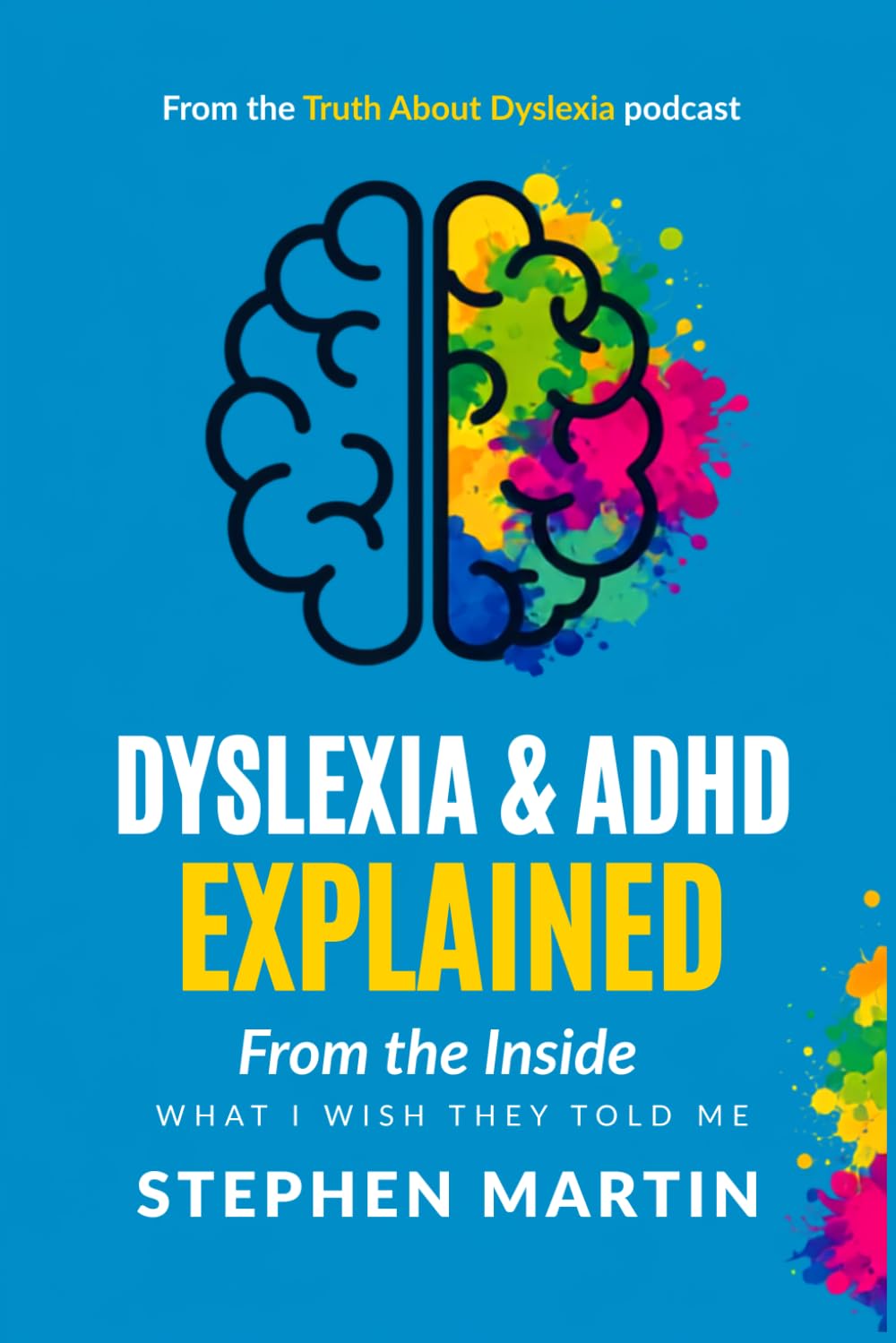
The book I wish somebody had given me at the start.
Dyslexia & ADHD Explained From The Inside brings Stephen’s lived experience and the clearest lessons from the podcast into one short, honest place to begin.
Read it for yourself, or give it to a partner or family member who wants to understand what can be difficult to explain from inside a dyslexic or ADHD brain.
“I read it in a couple of hours, as it was so interesting and I could not put it down.”
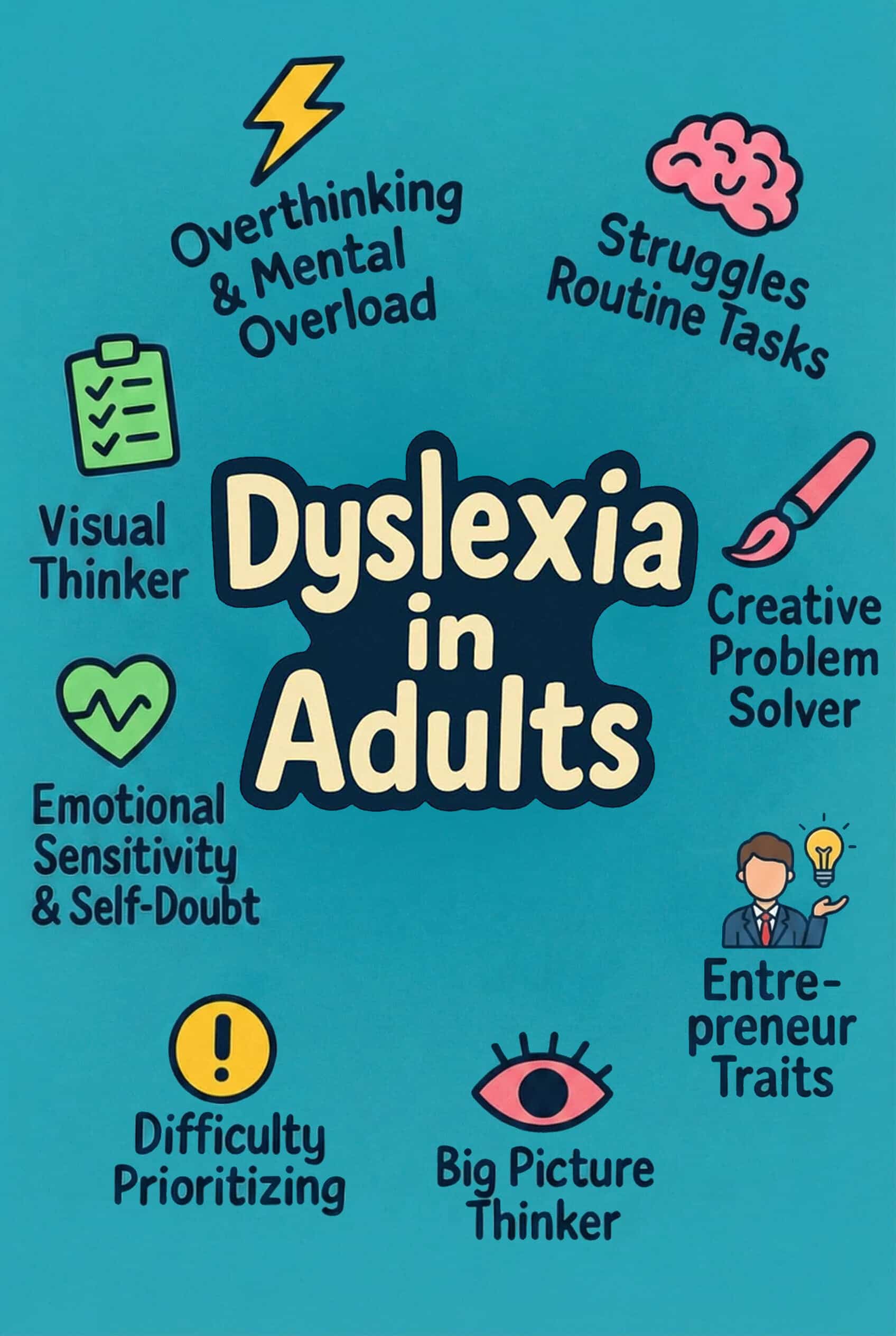
My experience has taught me that adult dyslexia is about more than the difficulties people notice at school. It can be brilliant, exhausting and often misunderstood.
How can adult dyslexia show up day to day?
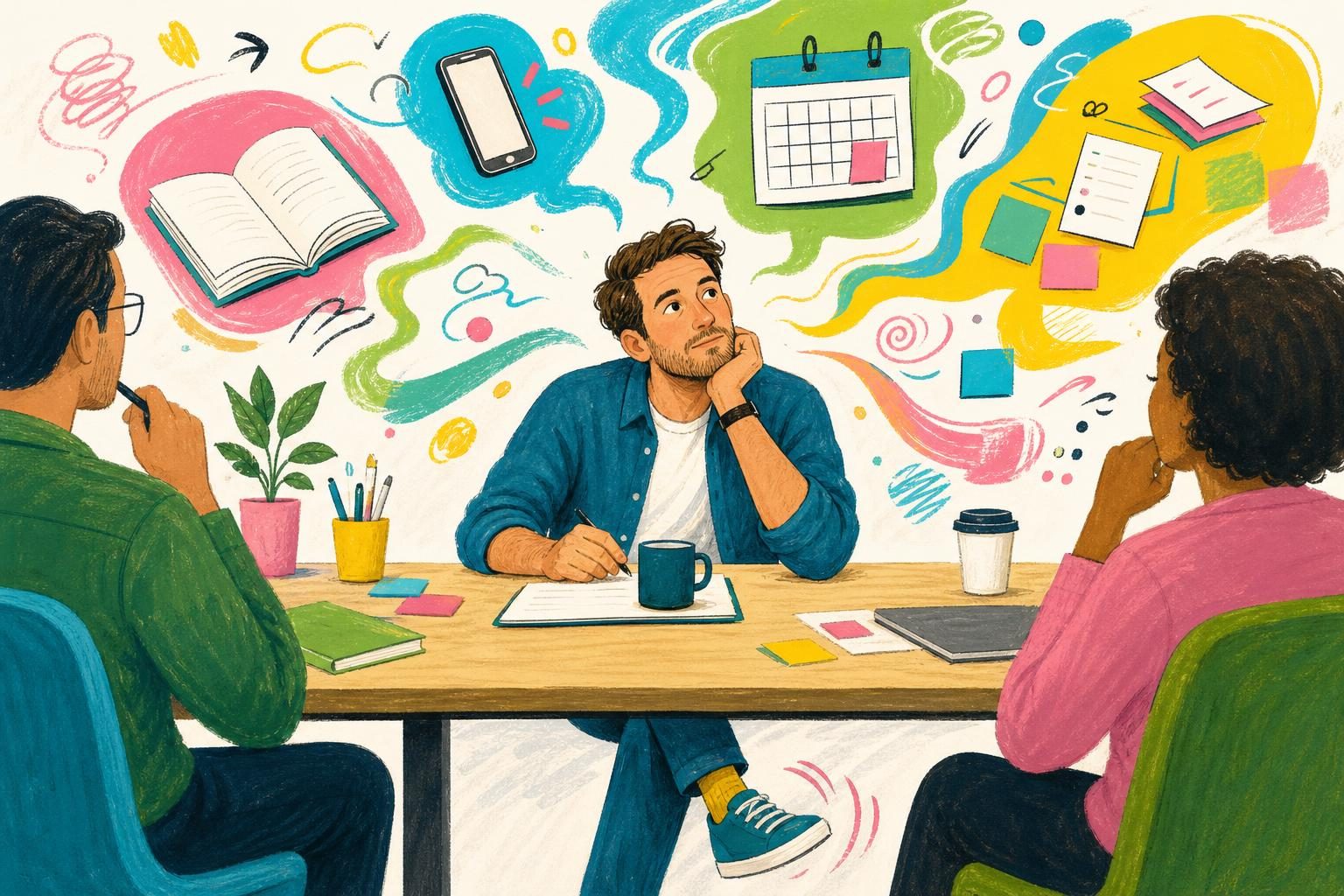
Many adults were told dyslexia was only about words, spelling and numbers. For visual thinkers, it can also show up in memory, time, sequences, directions and the feeling of knowing something clearly but struggling to explain it quickly.
That does not say anything about intelligence. A right-brained mind can think in pictures, patterns and connections at remarkable speed. The challenge is often making a linear world work with a non-linear way of thinking.
There is so much more than trouble with words.
A visual mind may need an image, an example or an experience before information really sticks. Written instructions, abstract words and long sequences can take more energy, while problem-solving, imagination and seeing the bigger picture can come naturally.
A little history and clarity.
Dyslexia has often been framed only as a deficit. That narrow definition misses the lived experience of adults who have spent years developing workarounds, carrying self-doubt and finding their own strengths. The goal here is not to minimise the hard parts, it is to make them easier to understand and work with.
How can these strengths and challenges affect daily life?
Thinking in vivid pictures can make you a fast, creative problem solver. It can also make planning, prioritising and recalling word-heavy instructions feel harder than they look from the outside. Recognising the pattern is the first step towards useful tools, more confidence and kinder expectations of yourself.