Truth About Dyslexia podcast
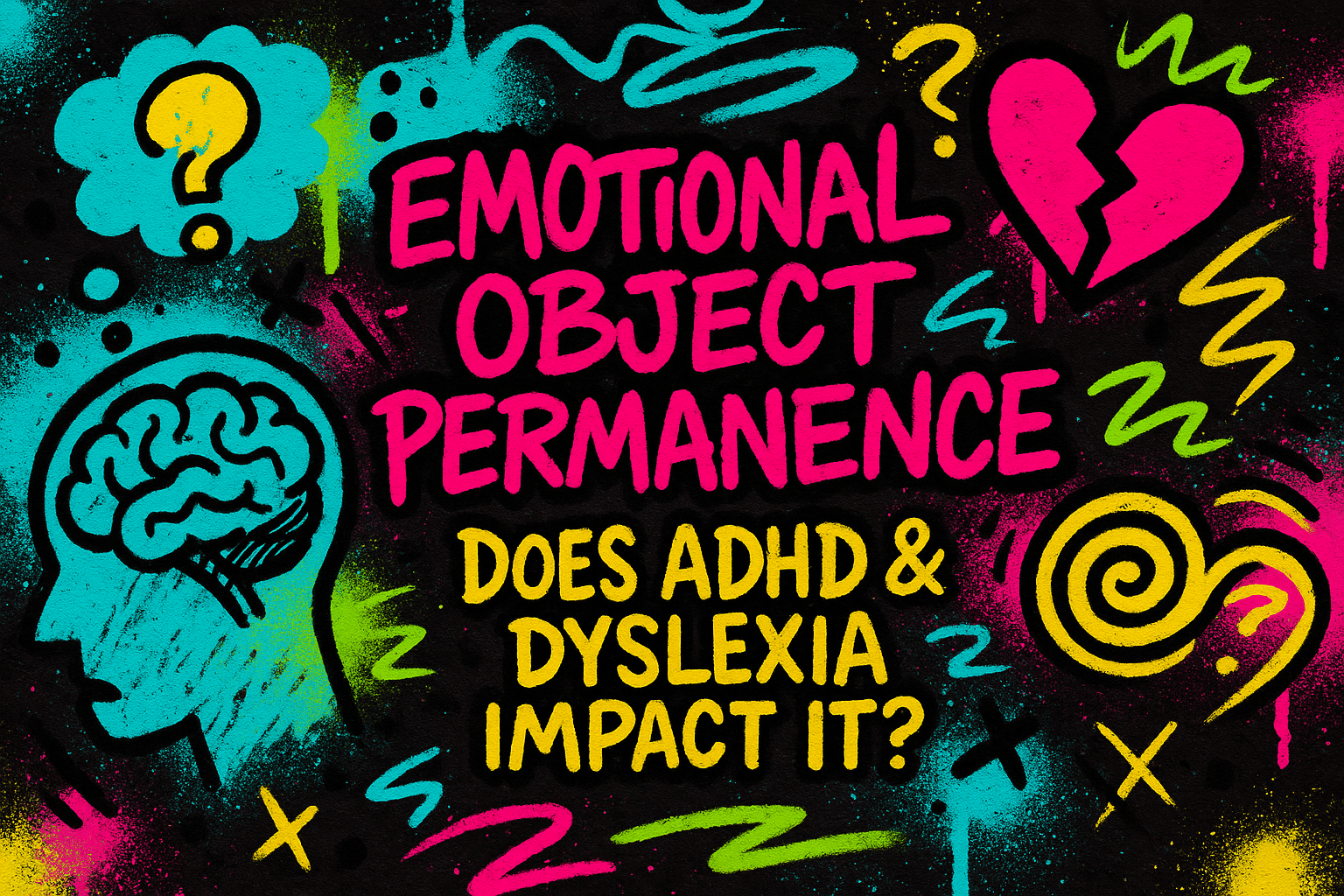
Emotional Object Permanence: Why People Can Feel Out of Sight, Out of Mind
If people, promises or goals can slip from your mind when they are not right in front of you, emotional object permanence may give you useful language for what is happening.
Listen to this episode
Emotional Object Permanence: Why People Can Feel Out of Sight, Out of Mind
Open this episode in Spotify

Follow the podcast and keep the next episode close.
What you will take from this episode
- For me, emotional object permanence describes how a person, feeling or goal can fade from view when it is not in front of my brain.
- This is not the same as not caring. Understanding the pattern can replace a lot of unnecessary self-blame.
- Visual and digital cues can bring important people, promises and goals back into view.
- A planned check-in can matter even when you do not feel like reaching out in the moment.
- Talking about this pattern with people close to you can prevent them from mistaking forgetfulness for a lack of love.
When someone you care about seems to vanish from your mental map
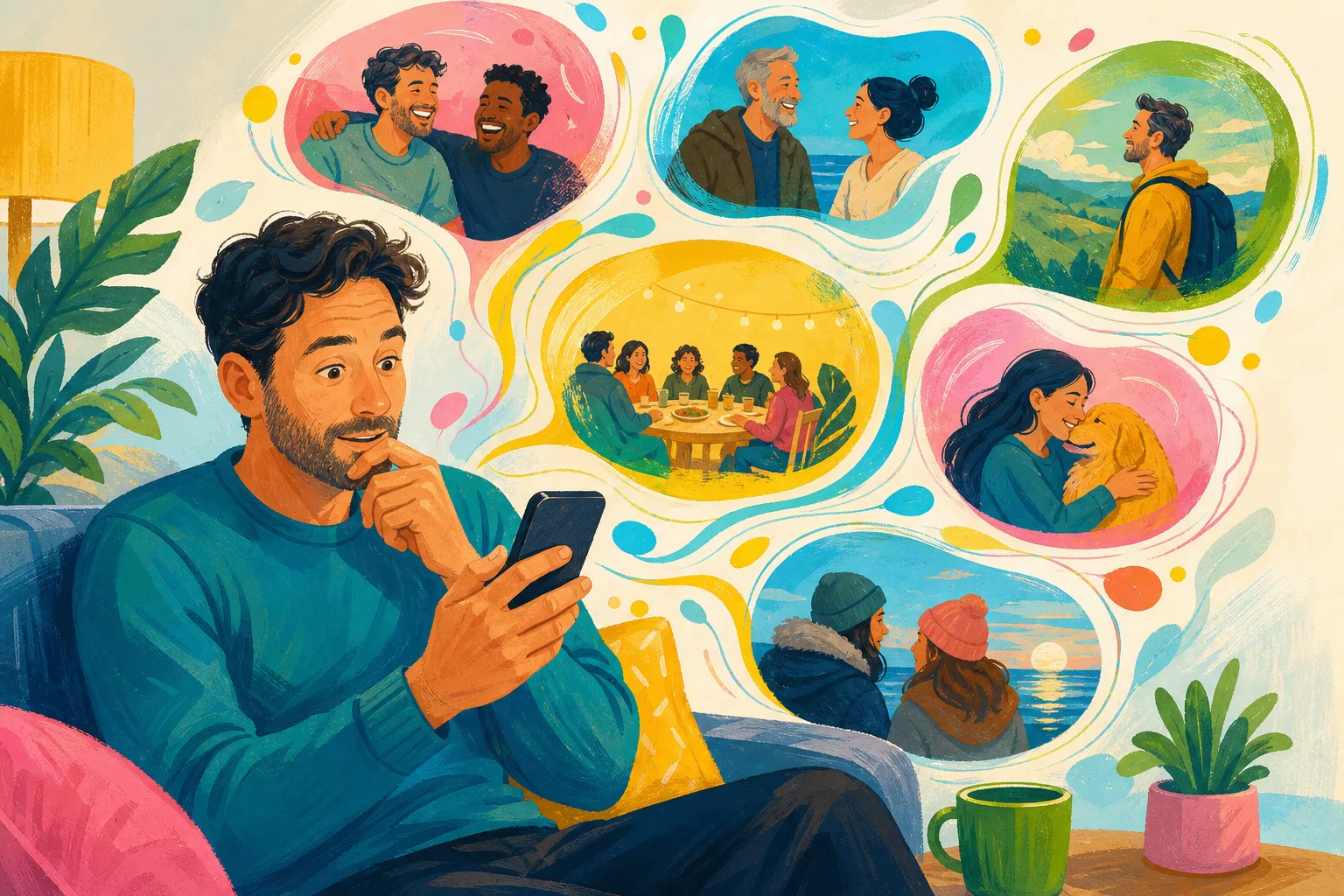
Have you ever gone a while without messaging someone you genuinely love, then felt awful when you suddenly remembered? Or had a close friend pop back into your life and found the connection was instantly there, as if no time had passed?
I have a good friend in Denmark and this is very real for me. If I do not see him, he might not be front of mind for a while. But when we reconnect, even after months without talking, it feels like we were chatting yesterday.
That does not mean I do not value the friendship. It means my brain seems to rely heavily on the person, the moment or a cue being in front of me to bring that emotional connection fully online. I have come to understand this through the idea of emotional object permanence.
What emotional object permanence means to me
A simple way I think about it is peekaboo. When a toddler cannot see someone, it can feel as though they have disappeared. With emotional object permanence, the person is obviously still real and important, but the felt sense of connection can be hard to hold onto when they are not present.
This is different from ordinary object permanence, where something put in a cupboard can disappear from your awareness because you cannot see it. I see that pattern in plenty of dyslexic and ADHD homes, including the need to leave things out so they actually get used.
The emotional version is about people, relationships, feelings and even the goals that matter to you. A relationship can go quiet in your mind. A promise can slip away while you are hyper-focused. A goal can lose its emotional pull when something else takes centre stage.
If this is sounding very familiar, you may also find my earlier piece, Why We Forget People Exist, helpful.
Why dyslexia, ADHD and mental overload can make it louder
I do not see this as a neat rule that applies to every person with dyslexia or ADHD. But I do think it is a pattern many neurodivergent adults will recognise, especially when working memory, attention and mental energy are under pressure.
When I am reading, writing, working hard or carrying too much in my head, it takes a heap of mental energy. Eventually, something drops out of view. It may be a message I meant to send, a household job I promised to do, or simply remembering to check in with someone.
ADHD can add another layer, particularly the powerful pull of what matters right now. I know how easy it is to disappear into hyper-focus. What feels like 20 minutes playing a game can be two hours, and then the bins, the promise or the message is nowhere in my brain because it was not in my eyeline.
This can create a horrible loop. You forget, you realise later, then you tell yourself you must be selfish, detached or broken. I used to do that to myself. The more useful question is, what did my brain need in order to keep this visible?

It can affect goals as much as relationships
Emotional object permanence is not only about friends and family. I notice it with goals too. Health has been front of mind for me recently, and for several months I put a lot of energy into it. Then other things took the front seat for a week and I watched some of my decisions slide backwards.
It was not because I stopped wanting to look after my health. I had simply stopped seeing it often enough. Once I put it back on my whiteboard and started thinking about it each morning, it came back into focus.
That is a big clue for me. If something matters, I cannot rely on it living quietly in the background of my mind forever. I need to give it a physical or digital place in my day.
The same idea comes up in my episode on how I stay consistent with a neurodivergent brain.
Practical ways I bring important things back into view
The first thing is a reframe: forgetting is not proof that you do not care. It may be a sign that your brain needs an external cue. I have found that self-awareness is far more useful than beating myself up.
Make the cue visual. Put a photo somewhere you will see it. Use a note, a calendar reminder, an app, a phone screensaver or a whiteboard. I change my screensavers and move things around because if an image sits there too long, I can start blanking it out.
Use the moment when the emotion is actually present. I have found it hard to summon a feeling on demand when somebody asks me to remember a time I felt a certain way. But if I capture an action in the moment, such as setting a reminder while I am thinking of someone, that can work much better for me.
Schedule check-ins with people you love. I occasionally call my 92-year-old grandmother even when I do not feel in the mood. The conversation might cover familiar ground, including how annoying my dad is, but I tend to feel better afterwards. More importantly, I know the connection matters.
You could share 20 Things to Remember if You Love Someone With Dyslexia with someone close to you as a starting point for that conversation.

Stop calling yourself broken, start building supports
The painful part of emotional disconnection is that it can feel like you are emotionally ghosting people, or even yourself. You know a person matters. You know a goal matters. But in a busy, tired or hyper-focused moment, the connection is not available in the way you wish it was.
I cannot promise a reminder will solve this for everyone, and I am not a doctor. What I can say is that having words for the pattern gave me a real aha moment. I stopped treating it as evidence that something was wrong with my character.
Pick one person, promise or goal that has gone a bit out of sight lately. Put one clear visual reminder where you will genuinely see it, then take a tiny action: send the message, make the call, write the next step on the whiteboard or set the reminder while it is fresh.
If you are still trying to make sense of the broader patterns in your life, the free adult dyslexia quiz is a useful place to explore the traits many adults recognise.
And if you want more honest conversations like this one, you can browse the Truth About Dyslexia podcast library whenever you need a reminder that you are not the only one figuring this out.
Remember what matters, even when your brain loses the thread
For me, the point is not to use emotional object permanence as an excuse. It is to stop using it as a weapon against myself. If I can see what my wiring is doing, I can build supports around it and make a repair when something slips.
You are not automatically a bad friend because you forget to message. You are not uncaring because a goal goes quiet when life gets loud. Give yourself a bit of forgiveness, make what matters visible, and take one small reconnecting action today.
Read the full episode transcript
Hey everybody, Stephen here from the Truth About Dyslexia. Now, do you ever feel like if someone doesn't message you for a bit, it's like they've vanished from your world completely? Or you forget how much someone means to you until they pop back into your orbit? You know, that's not coldness. It's not you being broken. That's emotional object permanence.
And if you've got dyslexia, ADHD, or both, it's a real thing. So in this episode, we're going to break it down. We're going to talk a little bit about it, and it's going to be an aha moment for many of you. So let's dive in. Okay, so this is a topic we've spoken about a while back, and I wanted to do a more advanced and interesting, you know, deeper episode on it because this impacts so many neurodiverse people. It is not funny, and many of us don't even realize that it's connected to the neurodiverse mindset.
And what it is is emotional object permanence. Now, this was first actually brought up to me by a lady called Joy, who sometimes listens to this podcast, and mentioned it as something that she'd been working on and learning about. And that, you know, I'm great, I'm easy. Throw me a hook out there and I will chase it down and I will learn about it because, you know, you only learn what you hear about. And so, so what is it? You know, imagine it's like a toddler playing peekaboo.
If they can't see you, you don't exist. Okay, so have you ever had times in your life where, you know, when you, and I find this very much with close friends. I've got a really good friend in Denmark. If I don't see him, I don't really think about him much. But the minute I see him, it's like we've been talking every day for, you know, every hour. You know, we talk like we've never been away from each other.
We've had times we've been six months we haven't talked, you know, haven't spoken, and then the next day we're back together as friends, and it's literally like we were living together. It's that amazing. And so that's kind of like this emotional object permanence. It's kind of this emotional connection is so, you know, some might call it energy. You know, you're close to someone, there's energy. But it's more about, you know, the visual cue or the connection with that person.
You know, it's, and there's a few things we're going to talk about how to use this and improve this in your life, because it's very common, I find, with neurodiverse adults. And, you know, for many neurodiverse adults, you know, this doesn't go away emotionally. So the whole point of emotional object permanence is the emotional side, this connection. It's kind of the difference between object permanence. Object permanence is where if something's not in front of you, it doesn't exist. It's kind of why you see a lot of dyslexic and ADHD households being very messy with things everywhere, because they know if you put everything away in a closet or a cupboard, you wouldn't see it unless you'd never use it again.
You know, I see this in kids' rooms a lot, personally. And it's, so again, we're not talking about objects in this case. We're talking about people, emotions, relationships, and, you know, even goals, the emotional relationship to goals in your life. You know, those goals where when they're front of mind, and for me, health at the moment is really front of mind. And for like four, five months, I've worked my bum off with health. In the last week, it kind of, I don't want to say disappeared, but other things took a front seat, and I stopped looking at health, and I just watched some of my decisions, you know, go backwards.
Not terribly, not that I can't solve, but it was because I'd stopped putting it front of mind. So I've gone back to thinking about it every morning. I've got it on my whiteboard in front of me. I've, you know, had to make sure it is in front of me, or I know it'll disappear from my brain. Not because I don't want it, but because this is how emotional object permanence works. And for me, I'm so driven by my emotions, if I don't get the right stuff in front of me, I go down the wrong paths.
This is why this is such an important episode. So why does this happen, especially with ADHD and dyslexia? You know, working memory challenges. You know, you can't keep people or emotions in mind without consistent triggers or constant triggers. You know, that's something to be very aware of. Like, naturally, our working memories are not as good across the board, and so, you know, we can only, we usually seem to hold less stuff in our minds all at once.
It just seems to be a common trait. On the ADHD side, you know, ADHD often impacts the prefrontal cortex. Now, many people with dyslexia have some level of ADHD. Maybe it's enough to be diagnosed, maybe it's not, but, you know, that's the what matters right now part of the brain. You know, so that is very much, you know, can only hold so many things in it at once, and ADHD impacts it. For dyslexics, mental overload and cognitive fatigue can cause disconnection from feelings and relationships, you know, when they're not right in front of you.
If you've been working really hard, and, you know, with dyslexia, if you're reading a lot, if you're writing a lot, you know, even if you can do it, it takes a lot of mental energy, a heap of mental energy. So again, all of this puts more stress on the brain and your mind, and you can only do so much at once. And so that is why your brain, especially visually, relies on visual Visual cues more than anything. It can also mean, like, if you miss something that's really personal for somebody, like say it's a birthday or something, you're supposed to reach out and it didn't happen, you can feel really bad. You know, it's like you also sometimes find, I find with values, you know, I feel like I go against my own values sometimes, not because they don't value them, but because of this challenge with this emotional object permanence. Like I love my family, I care about them, but there are times where I get so busy I just, I forget to do something.
So for example, maybe I'm playing video games for what feels like 20 minutes, but it's actually two hours of me playing video games and I forget to do something I promised. Maybe it's take the bins out or to fulfill something. You know, I feel really bad, but it was because I was so hyper-focused and it was out of sight, out of mind. Like if I'd actually taken the bins and put them in my eyeline, I probably would have remembered them. That's a bit more of the object permanence, but I feel like that emotional connection does play a big part. You know, and I've heard similar from other people where I love my family deeply, but when I'm in work mode or deep hyper-focus mode, I literally forget to message them for days, especially when you're not living with them anymore.
And then you feel horrible later, you know, because you promised something, but you just didn't do it. You just forgot, you know. And the same thing, like if my partner leaves for a week, I sometimes emotionally switch off, not on purpose. It's kind of like your heart goes into aeroplane mode. I really love that quote, you know, your heart goes into aeroplane mode. It's not that you don't love them, but it's like you've just started to focus on everything else around you.
And you can sometimes find, I find with ADHD and dyslexics, you know, even with me and my wife, like if we spend a day or two apart for whatever reason, or a night apart in different beds, it's kind of like your brain just switches and changes, and it's not,we don't enjoy it because, you know, it's just not the same, right? And so what do you do about this? You know, I love these podcasts being short, sharp, and to the point, but what do you actually do about emotional object permanence? You know, a lot of it's about reframing it. You know, this is the big thing. You're not a bad friend.
You are not emotionally detached, something I used to blame myself about. You're not selfish. You're wired differently. And now you can see what the wiring is doing, you can work with it. You know, this is the thing, like all about the self-awareness on the podcast and what I look at myself is the more self-awareness I can have, the more things I can alter, because I'm by no means a perfect human being, but if I can't see something, I can't change it. And this was a real aha moment because I was so like this.
I used to beat myself up and say, Oh, you just don't care. It must be something broken with you. But there's not. It's just the way my brain works, and I have to understand it. I have to give myself a bit of forgiveness before anybody else can. So here's a few tips for managing it.
Use visual or digital cues: photos, notes, apps. To remind you of people and emotions as well. You know, there's so many times, like I always remember doing NLP years ago, and this is kind of like an emotional, a real directly emotional example. I'd go to an NLP session, which is called neuro-linguistic programming, and I'd do some work with the lady there, and she'd ask me to remember a time where I felt a certain way. And I would sit there blank. I'd be like, I just can't raise those emotions in my body when they're not happening to me.
But when they're happening to me, it is literally like a flood of emotion. But to bring them into my mind, even using visuals, etc., I found it really tough. It took me a lot longer than I hoped, especially when I think everything in my life should be instant, which then frustrates me even more. But I found it really tough to do that. I had to work very, very hard, and I'm not sure how well it worked for me, if I'm honest, because I couldn't bring that emotion back.
If she'd have grabbed me at the moment of that emotion, and I sometimes find that works well for apps, because I can grab an app if I'm in that emotional state, that can work really well. The other thing is schedule emotional check-ins with loved ones, even if you don't feel in the mood. Like I do this with my grandmother occasionally. She's 92. She only has that much conversation. She's talking about how annoying my dad is.
So I hope he listens to this. He'll get it. And I was chatting to her recently, and again, I didn't really feel like it. I knew it would be 10 minutes of the same conversations, but by the end of it, I felt so much better, and it was a big check-in. Like, I know it made her feel better. I felt better.
You know, it's really important to make sure, even if you don't feel in the mood, that you still do it, because I don't always believe we can always trust our feelings. You know, our gut can be the most powerful thing in our lives, but it can also lie to us, in my opinion, in the neurodiverse brain and body. You know, also explain it to the people around you. You know, this is important. If your partner is not neurodiverse and you have these challenges, make sure they're aware of it. Get them to listen to this episode.
Tell them about it, because if they can't understand your programming, they're just going to get annoyed while the program isn't doing what they think it should do. Does that kind of make sense? I'd also, you know, I'd also go back to that first one again, visual or digital cues. Where can you put things up? Like I use the screensaver on my phone is huge, and I change it in and out quite a bit because if it stays the same for too long, you just blank on it. Same with the screensaver on my computer.
I always have my four big goals for the year, which is fantastic, and I try and change the visuals on that repeatedly just to freshen it up. And I use lots of whiteboards and try and, again, shift things around to stay front of mind. But if you're struggling with this problem, is make sure you make it visual and there for you, because that will make a difference. So this might be one of those things, you know, you've never had words for. Maybe this happens to you all the time, but you didn't even know this had something to do with dyslexia and/or ADHD. Think about what reminders can you set for yourself?
Who can you explain this to? You know, but let's start by stop blaming yourself for being broken. You know, instead, let's remember what matters even when our brains forget, and not to, as I say, don't beat yourself up about this. You know, sometimes you feel like you're emotionally ghosting people and even yourself. You feel, yeah, that emotional disconnection phrase that I've written down here stands out the truest to me, and it's painful. I really feel the pain around this one.
But now you kind of know more about it, give yourself a break. Hope you've enjoyed this episode, guys. I'm going to be trying to do an article on thetruthaboutdyslexia. com about this in more detail, so stay tuned. Thank you for those who followed me on TikTok under @truthaboutdyslexia. I'm starting to put more content out there as well, and have an epic rest of your day.
Thanks for listening to today's podcast. If you enjoyed it or you think someone else will get some value, maybe send it to someone as a text message or a WhatsApp message, or give it a share. We really appreciate it. If you'd like a little bit more help, visit truthaboutdyslexia. com or find us on Facebook. We've got a group there full of awesome people that you can ask questions to that are more than willing to share their experience.
Have an epic rest of your day, and I'll be back next week. Thanks for listening to The Truth About Dyslexia. This podcast is sponsored by Added Nutrition and our new product, Added Sleep. It's designed for brains wired differently. If you want to sleep better, maybe give it a try. Use the code TruthAboutDyslexia to get a $10 credit on your order at addednutrition.
com. Link in the show notes.
Recognise some of this?
Take the free quizSee which adult dyslexia traits feel familiar.
This short quiz is educational and gives you a useful next step.
Keep exploring this topic