Truth About Dyslexia podcast
How AI Is Changing Small Business for Dyslexic Entrepreneurs
I’m seeing AI change what small businesses can build, how many people they need, and which skills matter most. Here’s how I’m thinking about it as a dyslexic entrepreneur.
Listen to this episode
How AI Is Changing Small Business for Dyslexic Entrepreneurs
Open this episode in Spotify

Follow the podcast and keep the next episode close.
What you will take from this episode
- AI can make some small business ideas viable by reducing the time and cost of routine work.
- I think relationship skills, judgement and seeing the whole system will matter alongside technical skills.
- A small, specialised business does not need to serve everyone to work.
- AI is extremely useful for tactical tasks, but I would not hand it full strategic control.
- For many dyslexic and ADHD entrepreneurs, a trusted business partner can still be more valuable than trying to do everything alone.
The two-prompt moment that made me stop and think
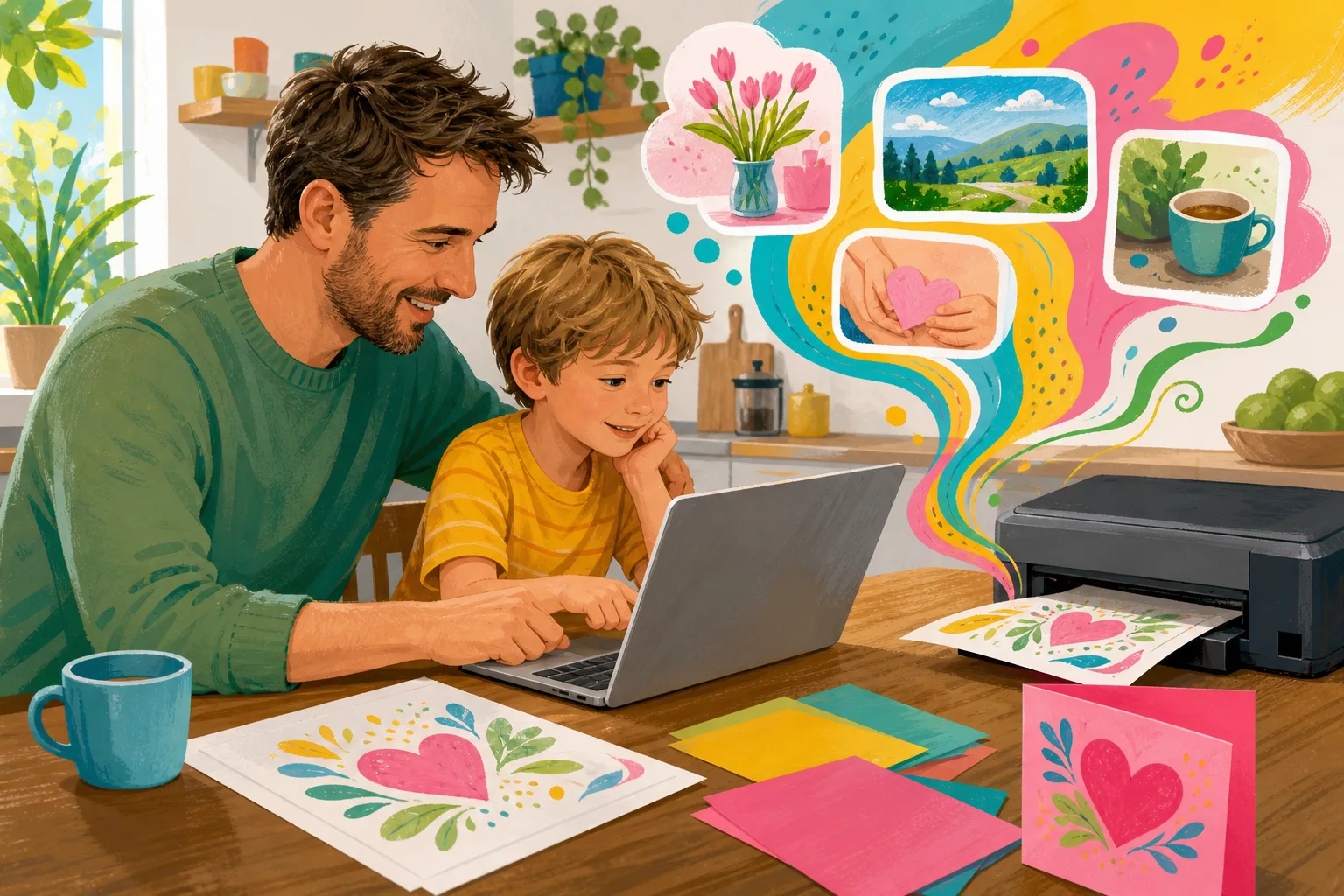
The day before Mother’s Day, my nine-and-a-half-year-old stepdaughter wanted to make coupon cards for her mum. She found a design she liked on Pinterest, sent it through to me, and we used AI to create a personalised version with the names she wanted.
A couple of prompts later, we had a print-ready PDF. We took it to a local print shop for nice paper and colour printing, and it came out brilliantly. We did something similar for an A3 poster for her room.
That tiny moment stuck with me because it took us from inspiration to a physical result incredibly quickly. A job that once involved finding, briefing and paying a designer was suddenly something we could create ourselves for a personal project.
That is the lens behind this state-of-the-nation update. I’m not trying to frighten anyone. I just think we need to look honestly at what is changing, because ignoring it could hit people very hard.
Some creative and service jobs are already being reshaped
My personal view is that hands-on graphic design, in the form many people have known it, is under serious pressure from AI. I would be very cautious about studying graphic design purely as a standalone career path right now.
That does not mean design knowledge is useless. Understanding aesthetics still matters if you own a business, manage products or create customer experiences. There is a difference between having design judgement and being paid only to manually produce every design asset.
I’m seeing the same question coming for my own core business, web design. At the moment, people still need someone to run the system and bring pieces together. Asking AI to make a website does not automatically produce a great finished outcome.
But I would be kidding myself if I assumed that will stay true forever. The format of a business can change much faster than we would like. The real question is not whether we can squeeze a bit more life from the old model, it is what we build next.
How AI is changing small business for dyslexic entrepreneurs
I think we are in a particularly interesting window for entrepreneurs. AI can support the bits of work that used to make a small idea too expensive, too slow or too complicated to test.
There are plenty of useful things that existed before AI but were inefficient. Maybe an outcome was valuable, but cost $500 each time to deliver when it really needed to cost $20. If AI and better systems change that equation, a business that did not stack up before may suddenly become possible.
This is where I see an opportunity for people who naturally spot connections, systems and the bigger picture. Not every person with dyslexia thinks in the same way, obviously. But many of us are good at seeing how a customer moves from problem to outcome, and where a process is clunky.
AI can help fill gaps, draft documentation, support customer processes, improve marketing and take pressure off a small team. In my own businesses, it is helping us do more across several moving parts. It is also giving my team useful extra support when the first attempt at something is not quite right.
If business ideas often feel exciting but overwhelming, you may find some useful perspective in my practical guide for dyslexic entrepreneurs. It looks at the practical realities of building a business with a brain that does not always fit conventional systems.
Small niches can be proper businesses
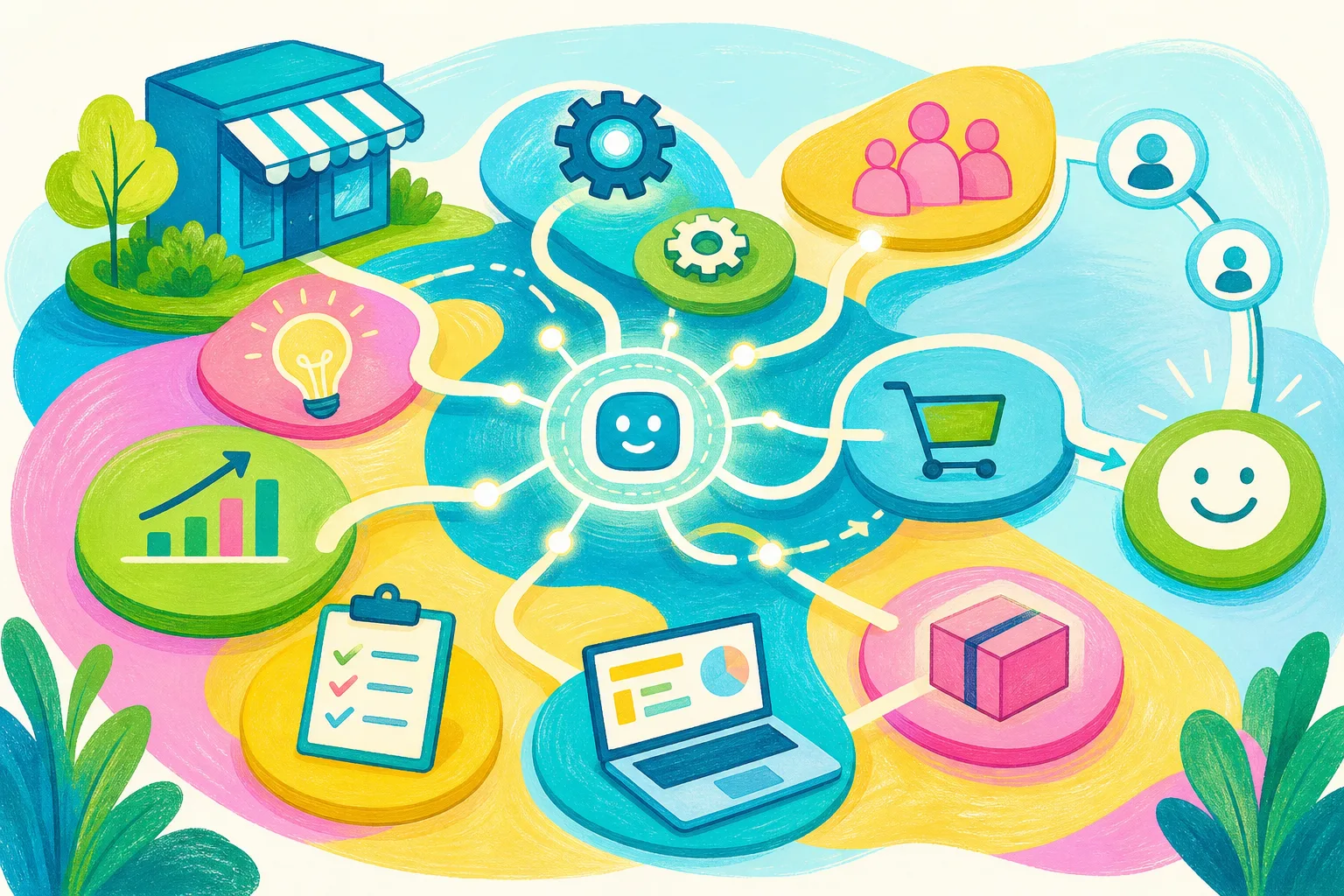
For years, I have been thinking about how a business no longer has to be big and broad to be worthwhile. You could serve 300 to 500 clients in a very specific niche, potentially from around the world, and build a solid small business.
That is different from trying to become the next giant company. It is about becoming very good at one useful thing for a defined group of people. AI makes that model more achievable because fewer people may be needed to run the back-end work.
I have been exploring this with bookcase doors, sometimes called Murphy doors in the United States. I have wanted one since I was a kid, probably because I always wanted to be Batman. The larger overseas companies are unlikely to make New Zealand a priority, because our market is small and spread out.
But a focused local business could still work if it is designed carefully. We have built and installed a first door with a brilliant engineer involved. The model I am exploring uses contractors for manufacturing and installation, while we focus on the brand, product, website, sales and systems.
In the past, an idea like this might have needed five or ten staff before it was feasible. Now it may be possible for a much smaller core team, supported by AI and software. That does not guarantee success, but it changes what is worth exploring.
If you are still working out what kind of venture suits your way of thinking, this episode on finding the right business for dyslexics is a good place to explore business models that play to your interests rather than forcing yourself into somebody else’s mould.
Soft skills and systems thinking may matter more than ever
If I were coming out of school now, I would put serious energy into relationships and soft skills. Being good with people, communicating, building trust and understanding what someone actually needs are difficult things to replace with a tool.
I also think generalists could do well in the near term. Someone who knows enough across marketing, operations, sales, customer experience and product can use AI to go deeper where needed. You do not need to be the best in the world at every discipline to bring a useful system together.
For right-brained, dyslexic or ADHD thinkers, this could be a real area to investigate. Seeing spatially, connecting ideas and looking at a business as a whole system can be valuable when there are more tools available to carry out the detail work.
It still takes follow-through, which is the bit many ADHD entrepreneurs know can be tricky. A great idea is not a business until it gets tested, built and improved. Pick something you are genuinely interested in, then make the first version small enough that you can actually complete it.
For a practical starting point when your head is full of ideas, these three tips for starting a business shares three ways to begin without trying to build the whole empire on day one.
Use AI as a tactical helper, not your only strategist
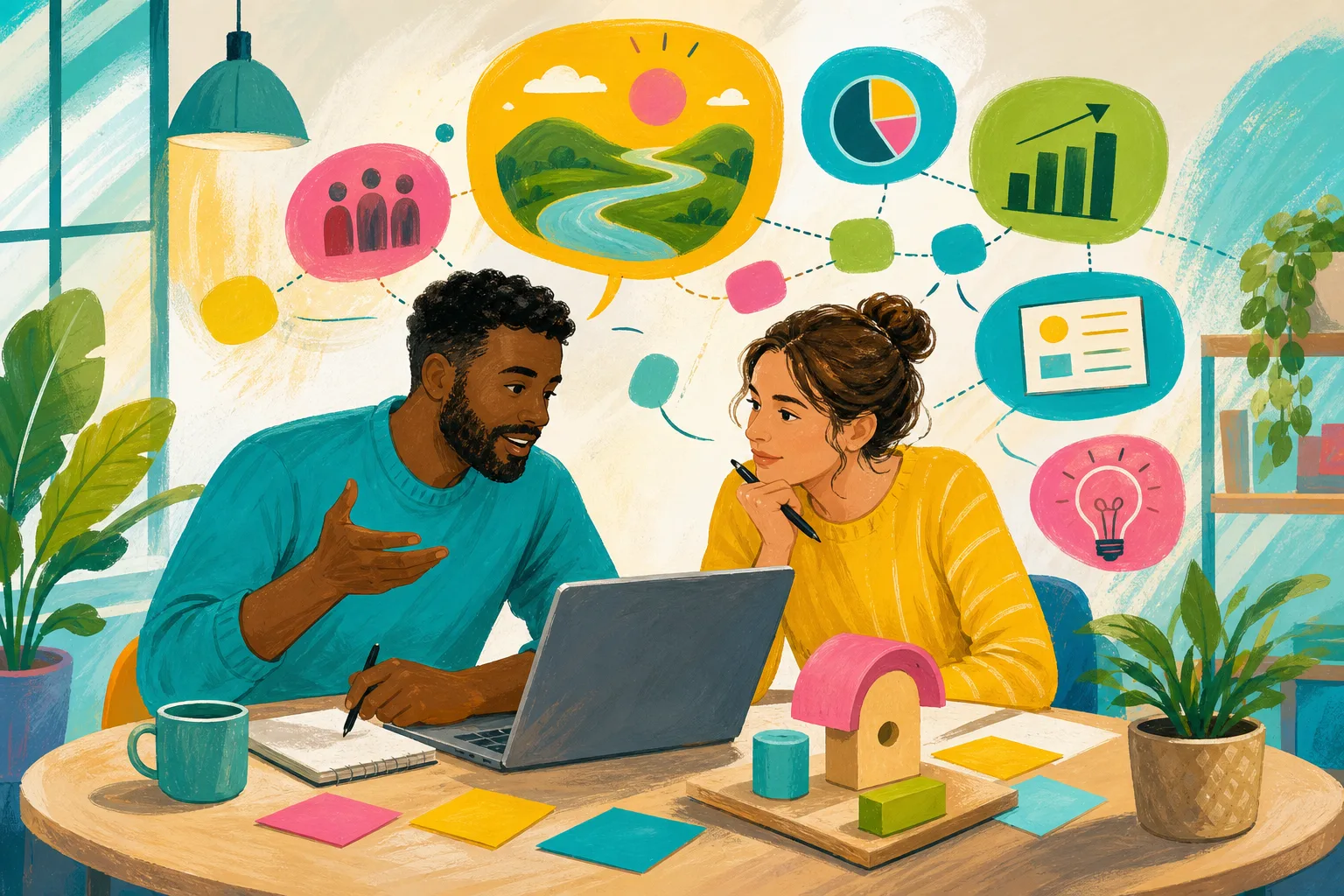
I am very impressed by what AI can do tactically. It can help create documents, organise thinking, draft content, support workflows and reduce the friction around tasks that used to take a lot more time.
It can also help with things that small businesses often skipped because they felt expensive or difficult. For example, I have been in business partnerships where we never wrote a shareholder agreement because it seemed like too much effort and cost. AI can make it easier to produce a starting point and understand what needs considering.
But I would be careful. AI can mirror your thinking back to you and give you a lot of confidence in a direction that is not actually the right one. I have noticed it does not always challenge you as much as a good human being will.
That is why I would not let AI make strategic decisions for me. Use it to flesh out ideas, pressure-test questions and get tactical work moving. Then bring in human judgement, real customer feedback and someone who is willing to say, ‘Hang on, have you thought about this?’
I also do not think the future is only one-person businesses. There will be some, for sure. But I can see plenty of two- or three-person businesses doing well, especially when the people involved complement each other and use AI wisely.
If you want more conversations that sit at the intersection of adult dyslexia, ADHD and real life, you can browse the Truth About Dyslexia podcast library and find the episodes that fit what you are dealing with right now.
And if you are still wondering whether dyslexia might explain some of the ways you think, work and get overloaded, try the free adult dyslexia quiz. It is an educational place to start recognising familiar traits, not a diagnosis.
Start small, stay awake to the change
My point is not that everyone needs to panic, quit their job or start a company tomorrow. The technology is moving fast, and I could record this now only for parts of it to look outdated six or 12 months later.
But I do think this is a good time to pay attention. Look at the work you do, the things people repeatedly struggle with and the industries where cost or complexity has stopped good ideas from getting off the ground.
If you are a dyslexic entrepreneur, or someone with ADHD who has been sitting on an idea, start by choosing one small problem you understand. Ask where AI can reduce the busywork, but keep your own judgement in the driver’s seat. Build relationships around it. Get a real person to challenge the plan. Then test something small.
Read the full episode transcript
Welcome to the Dyslexic entrepreneur. In today's podcast, I want to share my state of the nation. This is kind of where I see entrepreneurs working, what's happening in the current state. And so real update as of today, you know this, I record my podcasts and release them pretty quickly. So this will have been recorded a day out from release. And so this is very fresh and I kind of want to talk about what I'm seeing in my local economy, what I'm seeing internationally with what I'm keeping up with and where I think people are a bit blind.
So it's going to be a bit of a general podcast. I just want to, I don't want to use this to frighten people, but I want to use this to make people aware of what is changing because if we don't see this, it's going to hit some people with like a bag of bricks. So let's dive into today's podcast. OK, So what really led me to this was actually Mother's Day of all things that made me want to do this podcast. I was sitting around on Saturday, which is the day before Mother's Day, which is a Sunday, and I was talking to my 9 1/2 year old stepdaughter. She wanted to print something for her mom.
She wanted to print some coupons for her for Mother's Day and she found something on Pinterest that looked amazing. There were 10 coupons, really well designed, beautiful, beautiful looking things. Now she sent me that image of what she wanted. Now, within seconds, I put that into chair GPT, which has the best image model that I've found for the price and speed and everything else. I told it that I wanted to use her name and and the daughter's name, and seconds later it had produced a perfect image listening exactly what I'd asked it to do. It used thinking mode.
It thought about it and created it. Another 30 seconds later, I'd asked it to turn that into a print ready PDF, which it did. And we headed up to the local print shop because we wanted some nice fancy paper. You know, we love I love Holly. So we wanted to do something a little special and we'd get some nice, nice printing there in color because we don't even have a color printer these days. You know, I don't really use printers as much as we used to.
So we went up there, we printed it off and they were perfect. Now that took me two prompts to get from idea or you know, inspiration to outcome. Now that's pretty crazy right? We also did a poster for Mila's room in a three same concept. Found something on Pinterest, we changed a couple of colours and the name on it looked amazing and produced an A3 print quality ready PDF that could be printed out and it was perfect. So in my opinion, graphic design is dead.
Now, don't get me wrong, it's probably going to take a few years for it to completely die off as a profession, but I would not be studying graphic design at all. You know, it's, it's, don't get me wrong, understanding design aesthetics can be used in other parts of life. So if you're a product manager, if you're a business owner, it's good to understand the basics of design. If you're a product designer, of course there's going to be use for you. But as a, as a hands on graphic designer, I just think their role is their role is gone. You know, it is just, it's dead.
And again, it'll take a while for it people to catch up with this. But AI has replaced it. You know, anyone with a brain can use AI. I think Canva could be in a bit of trouble long term if they don't get the head around this. But a general purpose AI tool has, in my business replaced a graphic designer. And it's just the truth.
It's not trying to be mean, but this is just where the way the world is going. In the old days, when I was younger, I used to try and fight the stuff and say, hey, we need to fight this and people don't need to lose jobs. And, but let's be honest, this is going to happen one way or the other. You know, my web design agency, like that's what my my main core business has been for years. It's probably got maybe one to three years in its current format to go before it probably starts to really Peter off. We're starting to use different technology as we speak to improve things, to get better outcomes.
I'm still finding with web design itself, we need, you still need someone to kind of run the system. And it's not as simple as saying I'll build me a website and AI builds a great website. It doesn't quite happen yet, but I'd be foolish to think that at some point in the next 6 months, 12 months, three years, that's not going to be solved for. And it's intriguing to watch it happen in front of my eyes. And I could sit here and just kind of still get enough work to survive for now and to tick along, or I could open my eyes to change. And the reason I wanted to bring this up as an entrepreneurial point of view is being a business owner.
You know, I've gone through different iterations of what I've done, different systemizations, different things. And what am I seeing that I think might still work is, is until we get to this, this mythical AGI. And to me, everyone's got a different kind of explanation of what AGI is like. This is general intelligence. You know, someone said it to me really well. It's kind of real proactive intelligence to me is, is one of those where it can look at a business holistically and it can make proactive steps to create something.
Now people kind of have this working in different ways, using things called Cron jobs and heartbeats and and stuff. But it's it's a real tacky way of doing it. It's not quite what we're talking about. Like they keep talking about conscious AI. Who knows? That will come, what it'll look like.
All we know is we have created intelligence and intelligence is getting even more intelligent. Yeah, I still think there's a breakthrough or two to come before we get to this next level when that maybe is one year away. It could be 10 years away. We don't know, but we're tracking that direction and the tools that have been created are game changing. And So what should you do? Like if I was at school right now, I don't know if I'm honest.
I think learning how to how to use relationships, you know, how to be good in relationships with people, how to build soft skills are probably more important than hard skills. I think it's really going to be important to understand like we're who I think really going to succeed in the short term at least are going to be generalists, people that know a lot about a little because AI can fill the gaps of that lot. And the people that can also see, you know, and where I see dyslexic thinkers really working here, people that can see systems and spatial kind of thought process. They can see how business models, systems start to finish and can help to engineer that type of thing. You know, more and more the stuff I'm doing in my business is I've kind of got two or three different things running at the moment and without AII, don't think I could run them. My team as well, the guys that you know I love dearly, but not always that I always get it right the first time.
AI is really supporting them with a level of additional intelligence that's been super helpful and I'm seeing some real great results. And I, I do think entrepreneurs have a good chance at the moment in this Wild West zone to create things that have never been created before. There are things that truly were not efficient before AI that someone may have created it or done it and gone. That's really cool. But you know, it would be really valuable if we could do it for $20 a time versus it's going to cost $500 every time we do it. I, I think that is actually where the magic's going to happen is things that have already been invented and it already exists in business, but we're just so inefficient to do now are efficient.
Now you can apply some intelligence to it, basically buy intelligence to automate systems that just work. I also think like if you're thinking about if you're thinking entrepreneurs side of the world, which is what I am always thinking. I also think there's going to be a huge place for middle men in the future. People that sit between the consumer and an outcome that add a layer of simplicity or relationship or a layer of smarts to what already exists, which is the old adage of buy cheap, sell higher or buy cheap, add some value and then sell higher. That added value layer. If you can come up with something that's unique, something that's that works, there's a real opportunity.
And I think we live in this world and I've been thinking about this for years. Like if you think back 50-60 years, people like did a lot of work in their communities. Places were a lot more localized. You, you kind of had a small business and you had a number of clients that were in the region around you. Transport just wasn't as easy as it is today. I kind of see this from a digital online world now is that you could have a business with 300 to 500 clients in a specific niche that could be all over the world in a real micro niche.
And that could be your little small business. Like it's, I see it in the marketing industry a lot where a little agency might have 100 to 200 clients floating around doing a bunch of things for making enough money to keep the business running and doing pretty well. And I see that happening a lot more in different industries because it's going to just become simpler, right? Like we're looking at a business model. You know, one of the things I've been playing around with is my bookcase doors. I don't know, I've told everyone about this on the podcast, but I always wanted to be Batman, you know, since I was a kid.
And a year and a bit ago we started talking about, oh, we should create our own bookcase doors now in the US, they're called Murphy doors. They're pretty cool. There's other brands over in Europe that do this differently. And I was like New Zealand, we're just too small. These companies are never going to come here. It's just not viable.
They're just too, we're just too little a market. There's only 5 million people here and we're very spread out, so transport becomes a pain. There's a heap of negatives. But for a small company that can do it well and efficiently and use AI, there's a chance for an OK business. It's not going to be a game changer. It's not going to be our we're a multi trillionaire company.
It's it's kind of a small, it's a big player in a small, small area, if that makes sense. But for one player to do it, well, there is money to be made. I think personally, I don't think you could, It could sustain too many incumbents. But hey, who knows. So I've been putting together this business. We, I had my first door installed the other day.
We, we built it with an engineer who's brilliant. And we're going to be using AI to see what we can do around building a business model that works where we, we contract the manufacturer out and the installation and we run the brands, the product, the model and everything. So kind of turned it into like a franchise kind of licensee kind of situation. I'm not going to go too much detail into that, but what I'm trying to explain is the different side of thinking is that for this to work for us, we can use AI and my my understanding of business to create websites in this niche to bring in sales, to use AI to close sales even and to help us with like product documentation. You luckily we've got a good engineer on board who's doing a lot of that side of things. But we can use AI to supplement a business which may have had to have 5 or 10 staff in the past.
This may work fine with three staff, AI and some software, you know, for the core business, which would never have worked in the past, we'd have had to have a couple of extra people doing other things which then may have not actually made the business, you know, feasible. If it cost another 100 and 5200 grand a year to run, that would have really eaten into the profit line. And so this business is actually potentially become more feasible due to these changes. And then it comes down to my understanding of models and how, how can we do this in a way that doesn't involve a huge amount of capital, but gets a good result. And this is just one idea. So there are thousands of these ideas floating around and you can do, you can do a bunch of them with just creating quite a small niche business that that works.
Something that you're passionate about, something that you're interested in, something that you'll follow through with. Because that's always the key with the stakes here in ADHD entrepreneurs is are you going to follow through? You know, and This is why I still believe like I put like people say, there's going to be a lot of one man band businesses floating around. I think there will 100% be a few of those. But you know, all the years I've been around, even though I've had my issues with business partners, and that's a whole another podcast about picking the right partners, making sure you've got agreements in place, shareholder agreements and stuff, which again, can be written by AI and helped out. Like there's a heap of stuff now that if you understand it, you can do it.
Like in the old days, getting, you know, a little aside here, but if you bring on a business partner to get a shareholder agreement would have taken a lot of work. You can now with an hour and an afternoon and AI write something that works, you know, something that's a lot better than what most people would have had. And so you can actually do some of the stuff that was usually missed. I've had partnerships where we never wrote a shareholder agreement. It just seemed too expensive and hard. Now we can get it done and at least there's some protection in in the system, but I truly think there's going to be a lot of two to three man businesses floating around because I still think it's good to have someone other than AI to bounce things off against.
AI still makes a few mistakes. It also 100% gives you confidence to go in a direction that I don't always think works. I've noticed this with health. If you really, if you start to, it starts to mirror a lot of what you tell it. Occasionally it'll call you up, but very rarely. So you got to be very careful with using it as your strategic advisor.
Even to this day, you got to remember it is still a piece of software that's there to help you. Tactically. I think it's brilliant. Tactically, AI is stunning. Strategically, it can help you flesh your stuff out. But I wouldn't let it make decisions for you.
I think more people are going to get harmed and helped. This is my take on it at the moment. And again, remember, I'm talking about this as of today. The world is changing at such a pace that this podcast could be completely irrelevant in 6 to 12 months time. But at this moment, I, I could see like if I was, if I was coming out of college right now, I would be finding a business partner and I'd be starting something because you can do it. Even if you're in college.
It's never been a bit of time to just start something and get it going because you can turn something around so quickly. And if you've got the confidence, you've got nothing to worry about. But yeah, that's what I wanted to share today. Guys. This is my thinking about business and the state of the nation. I think this is across a lot of Western countries at the moment.
I'd love to hear your thoughts. Reach out to the thanks to entrepreneur. com websites up and running. I'm starting to get my branding all tidied up. Follow me on LinkedIn and other places. I'm doing a bit more on LinkedIn at the moment.
Have an epic rest your day and I'll be back next week. Thank you for listening to today's podcast on the truth about dyslexia. If you're looking for a group of awesome humans to help you with ADHD, dyslexia and the neurodivergent brain, maybe The Right Brain Resetters is for you. You can find us at rightbrainresetters. com and for just $7. 00 a month you can join our amazing group where you'll get Q&A's.
You're going to get little mini courses and heaps of stuff. It's way more value than you will invest in joining, so make sure you head to rightbrainresetters com and we'll put the link in the show notes.
Recognise some of this?
Take the free quizSee which adult dyslexia traits feel familiar.
This short quiz is educational and gives you a useful next step.
Keep exploring this topic