
Truth About Dyslexia podcast
What Went Wrong With My Sleep Supplement, and What I Learned Instead
I thought I was creating a supplement to help me fall asleep. The real-world testing gave me a different answer, and taught me a lot about stress, sleep quality and honest product building.
Listen to this episode
What Went Wrong With My Sleep Supplement, and What I Learned Instead
Open this episode in Spotify

Follow the podcast and keep the next episode close.
What you will take from this episode
- A product can have an effect that differs from the problem it was originally designed to solve.
- For me and a small number of early testers, the notable experience was better sleep quality and more calm during the day, not falling asleep faster.
- It is easy to expect an immediate, obvious switch with ADHD and dyslexia, but some changes may be more gradual.
- Consistency matters when you are testing a habit, routine or product for yourself.
- Walking and meditation are two regular practices I return to when life starts feeling too full.
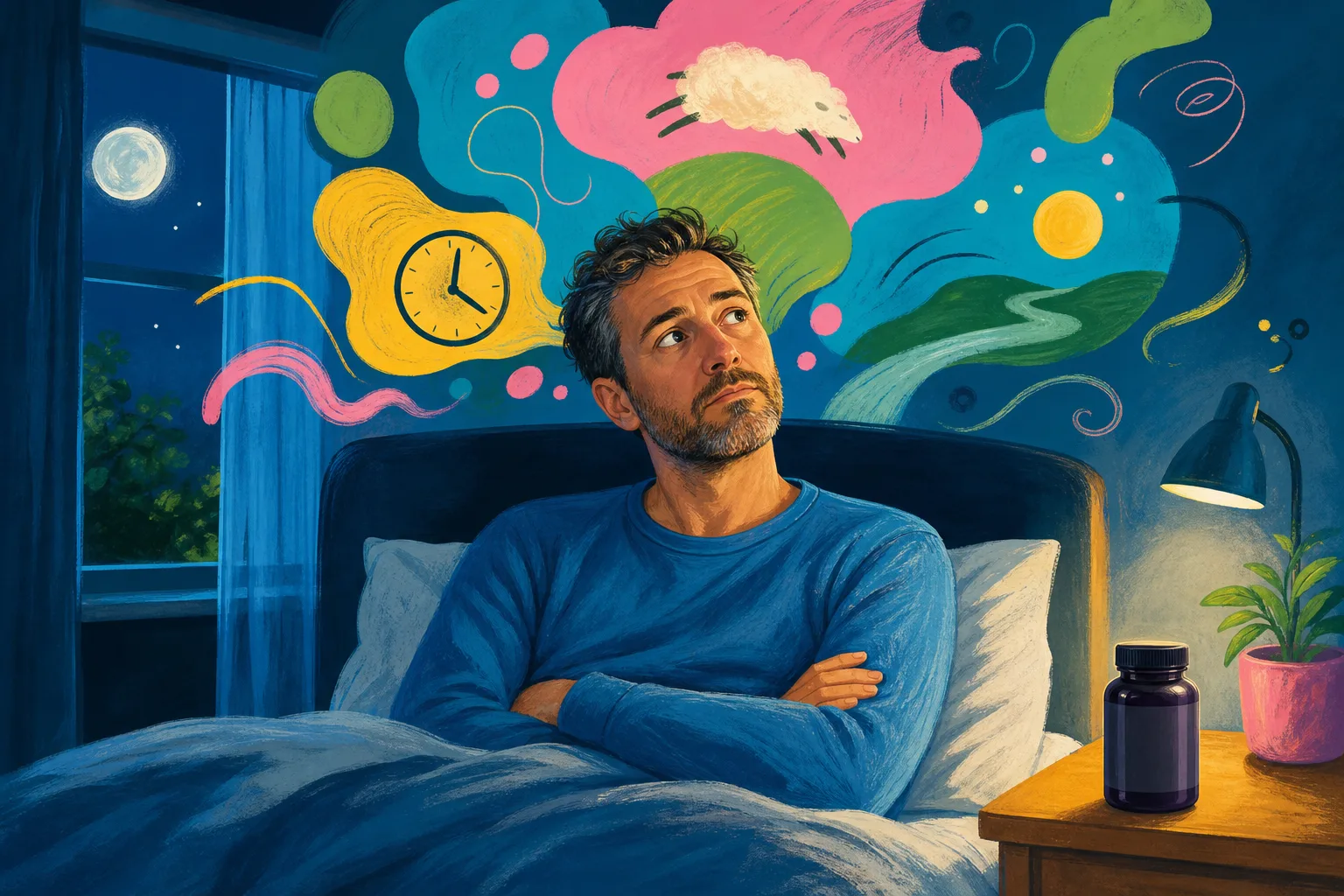
I thought I had made a sleep product. Then I realised it did not help me fall asleep.
There is a particular kind of horrible laugh you do when you have put months into something, made a thousand bottles of it, and then discover it is not doing the main thing you thought it would do. That was me with Added Sleep.
The original hope was pretty simple. I wanted something that could help with the stress, overstimulation and wired feeling I can carry through the day, and that might make nights easier too. But the early testing made one thing clear: it was not giving people a quick, sedative-style falling-asleep effect.
That was frustrating, especially because I am someone who likes a clear answer. Did the switch turn on or off? Did the thing work or not? A more subtle result can be harder for my ADHD and dyslexic brain to read.
The problem I was actually trying to solve was stress
The idea did not begin with a perfect sleep plan. It began with me feeling like I ran too hot. When stress builds, I can get overwhelmed, overstimulated and flat by the end of the day. Sometimes that spills into how I show up with my family, and I do not enjoy that version of myself.
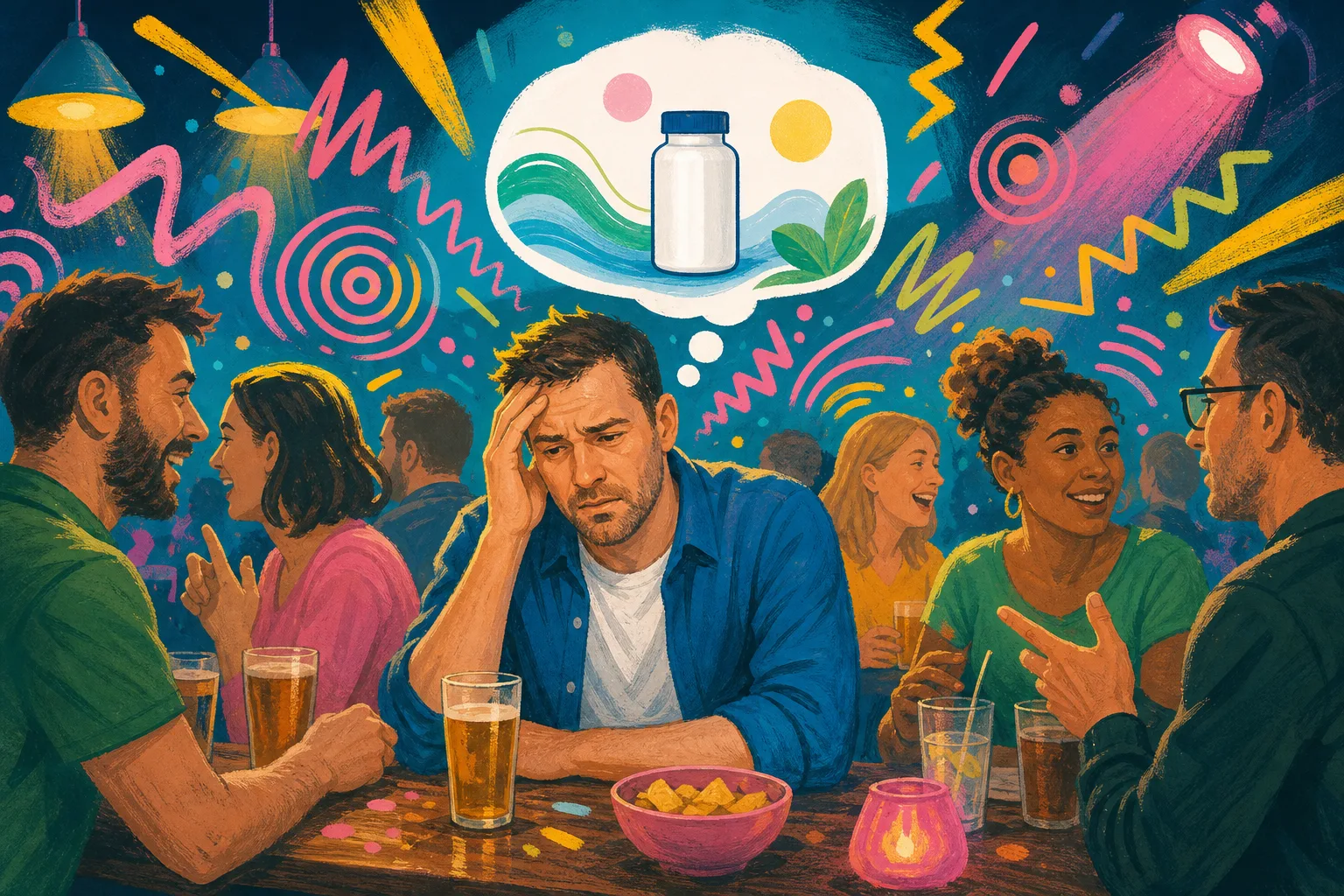
A loud pub quiz was one of the moments that made this especially obvious. I love going along with friends, even though our team is regularly competing for the booby prize. But if I was already in the wrong headspace, the noise and activity could become too much and I would want to leave early.
That does not mean every adult with dyslexia or ADHD experiences noise, stress or overload in the same way. It is simply a pattern I have noticed in myself, and it is why calming my system was always part of the bigger goal.
If sleep and an overactive brain are familiar themes for you, you may find some useful context in my thoughts on ADHD and sleep.
I have also shared more of the behind-the-scenes reality of taking an idea into manufacturing in my earlier episode about manufacturing a product with ADHD and dyslexia.
What the early testing seemed to show instead
After taking the supplement consistently for around a week, I noticed that I was waking up feeling better. My own tracking suggested improvements in my REM and deep sleep, but the main thing I could actually feel was that I seemed more recovered in the morning.
At the same time, I was not falling asleep noticeably faster. It calmed the bedtime experience for me, but it was not a knock-you-out product. That distinction matters, and it is why I have had to be really honest about how I talk about it.
One early tester tried it in the morning, around 9 or 10 a.m. They said they felt more settled through the workday. They were dealing with a lot of stress and had been considering leaving their job, so feeling calmer was meaningful to them. That is their personal experience, not a promise or a medical conclusion.
I then tried taking it at about 11 a.m., when I was eating. I felt less like I was operating in full ADHD power mode all afternoon. I felt calmer and believed I was making better decisions because I was not running at maximum stress all day.
For me, the funny part is that this was close to the original problem I wanted to solve. I wanted to get through a two-hour quiz night without getting overwhelmed or burning out. After testing this timing, I managed the full night and enjoyed it. Sometimes the answer arrives wearing a completely different name tag.

Why timing, tracking and consistency are not small details
I track a lot. I use an Oura Ring, and I like having data to look at. But even with tracking, working out what has changed in your body and why can be messy. Stress, food, routines, sleep, work and life all show up in the same experiment.
I have learned not to assume that a product, habit or strategy has to work at one exact time of day for everybody. Some people in the early testing still preferred taking it at night and reported better sleep quality. Others found the daytime experience more useful.
If you are trying something new in your own routine, give yourself enough consistency to notice a pattern. For people with ADHD, dyslexia or other neurodivergent traits, remembering something daily can be the hard bit. Put it beside something you already do, rather than relying on your future self to remember.
I am sharing my experience here, not giving medical advice. If sleep problems are ongoing, severe or affecting your wellbeing, it is worth speaking with an appropriate health professional.
The hard part of being a dyslexic or ADHD entrepreneur
I can often help someone else see their marketing, website or business problem pretty clearly. When it is my own product, I am far more emotionally tied to it. That makes every result feel bigger, and every unexpected turn can feel like a small rollercoaster.
In this case, I had to sit with the possibility that I had made something that did not work. Then I had to look more closely at the feedback instead of forcing it to match the original label. The learning was not that the work had been pointless. It was that the story and use of the product might need to change.
That is a useful reminder for any neurodivergent entrepreneur. Your first idea may not be wrong, but it may be incomplete. Real-world feedback is where the sharper version often starts appearing.
If you are carrying the many moving parts of your own work, this episode on solving business problems without burning out may help you think through the pressure without trying to solve everything at once.
When life gets harder, I look for what I stopped doing
Alongside all this product testing, I have been trying to get back to regular walking and meditation. I tend to do them consistently for a while, feel the benefit, then life gets busy and I fall off the wagon. Very human. Very annoying.
For me, a 25-minute meditation and regular walks help. They are not a magic fix, and I do not expect them to solve every difficult day. But they are part of the maintenance that keeps things steadier when I actually do them.
I think of it a bit like cleaning. You do not clean the house once and then expect it to stay that way forever. A lot of wellbeing is the same. It is the small things done repeatedly, not one perfect intervention that fixes your whole life.
If you are trying to recognise the patterns behind your own right-brained way of thinking, you can start with the free adult dyslexia quiz.
For more conversations like this one, have a browse through the Truth About Dyslexia podcast library.

A more honest way to test what helps you
The biggest lesson from this little founder story is that I do not want to pretend a result is something it is not. A sleep supplement that does not help you fall asleep is a strange product story, but it is the honest one I have right now.
For me and a few early testers, the more interesting question became whether calmer days and better-quality sleep were the real experience. I am continuing to test, listen and learn rather than claiming I have found a universal answer.
If your brain feels constantly switched on, pick one small thing to make easier this week. It could be putting your walking shoes by the door, setting up a meditation, or placing something you want to take consistently next to your first meal. Keep it simple enough that you might actually do it.
Read the full episode transcript
Hey everybody, Stephen here from the Truth About Dyslexia. In today's episode, we've got a fresh one for you. This is a bit of an update cast. I want to talk a little bit about some learnings I've had making this added sleep product and working out how it actually doesn't help you fall asleep, which has been a real interesting learning. I want to kind of explain how it got there because it's quite a funny little founder's story that I learned along the way. I want to talk a little bit about other things that are going on in my life that my dyslexic brain is helping me with and a few things that it is making harder.
So let's dive into today's episode. Okay, so I hope everyone's enjoying that the podcast is back to the Truth About Dyslexia, help for adults. I really want to kind of stick to that. You know, I bounce around like any other dyslexic brain, which doesn't like to sit still for a long period of time. And with this being kind of like a pet project, you know, just remember, guys, you can always reach out to me and send me messages on truthaboutdyslexia. com.
Any questions that come to me, I'm happy to address in the podcast. Imagine getting a little coach to help you, you know, and I get some real common ones around relationships, etc. So I'm really open to anything that is out there. But I wanted to start off with, so if you've listened to a few podcasts I've put out over the previous months, addednutrition. com is live, and we're still testing it, measuring it, trying different things out. The website's always a work in progress.
You know, being a website designer myself, I'm a bit of a mechanic. So some things work really well, other things are kind of testing. That could just be the way my dyslexic brain works anyway, and I enjoy that side of things. So that's been really, it's been a really fun journey. We literally have product that's sitting in a warehouse that we can ship out. Now, we currently only ship to the US, but we're looking at shipping overseas as well shortly.
So we're just sorting out some technicalities. There's a lot of stuff we're learning around tax and sending things to certain countries, so that will happen soon. So stay tuned. Thank you for everyone's patience. I know I have a bunch of listeners in the UK and Australia and New Zealand. I have got a few bottles in New Zealand that I'm testing with at the moment, which is exciting, and we're getting some really good results in some ways and some terrible results in other ways.
And this is what I wanted to talk about. So when we originally developed this, this kind of concept. When I first originally thought about this, the actual problem I had was I run really hot. I get really, my cortisol goes up. Stress overtakes my brain. I can get overstimulated, overstressed, and I can either burn out in a day, so by the end of the day I just can't be bothered doing anything, or I can just, I just kind of, I kind of live in stress all day.
So my body is just, I'm trying to think of the right wording for this, I just feel overwhelmed. I feel I can be really poor at night with my family sometimes if I had too much going on, and it's a real pain in the butt, not gonna lie. And so the original idea I had for this whole supplement concept was I was sitting at a bar. We go to this thing called Quiz Night in New Zealand, where we, for two hours, we answer questions without ChatGPT helping us, just to see if we actually can remember anything. If you've ever gone to what's called a pub quiz or a bar quiz, we do it every week with some close friends. We're absolutely terrible.
You know, we usually get the, what they call the booby prize, the second to last. We win like a $25 thank you for participating voucher more often than not. We do it more for friendship than having a bit of a laugh. But there was a period there where I was getting really stressed, and even, you know, I know with the way I'm quite sensitive to certain noise, like if it's a really loud bar and I'm in the wrong headspace, I can't stay the whole time. It just overwhelms me. And I was getting to a point where that was happening more often than not, and that was frustrating.
And it's actually why I decided to create Added Nutrition. I was like, I want to create a supplement that solves for this problem. And then I went off on my journeys, and for some odd reason, I knew that sleep was a problem for me as well, and I couldn't quite, I couldn't quite get to sleep. And also, like, my nights were very mixed. I'd have, like, I track everything. I have an Oura Ring, and I love to track things.
And I wasn't really getting through the night very well. I'd have some, like, really, even if I'd have a long period of time asleep, it would be quite poor, and I didn't really understand what that was for. Now I'm starting to wonder, if I'm honest. So this is really just my personal account, guys, as well. This is not medical advice. This is just kind of how I've experienced it all.
And so when I launched Added Sleep, I, you know, I spent maybe six months working on a formula. It was quite hard to get some of the ingredients in New Zealand to test it before we produced it and manufactured it over in the US. And so we tested our version of it, seemed to work. And then just before I kind of launched it fully, I made a few changes to the recipe. And so I went real ADHD dyslexia, overthinking it, tweaked a couple of things. And what it's kind of led to, and again, I don't think actually what I changed would have made much of a difference, is the supplement doesn't seem to actually help you get to sleep sleep.
You know, sleep, sleep, that's a technical term. It's, in essence, if it's taken at a certain time, it will calm you to sleep, but it doesn't have, like, a sedative, melatonin. This is just going to knock you out. And a lot of ADHD dyslexic thinkers, we're not always good with time horizons. We're not always good with, did that actually work in my body, kind of feeling. Like, I'm terrible at it.
I really like things that I know, did the switch go on or did the switch go off? And this doesn't do that for that purpose, which is really, really frustrating. You know, I'm really just being so honest here. Like, I had to laugh when this started to happen. It really, I was like, oh my God, what's happened? And so I was like, especially because until you really get, like, a run of bottles made, you can't really test it on mass because you can only produce so many at a demo phase.
You just can't produce,I haven't been able to at least,produce a lot. So I've got a thousand bottles of this that we've created, and I was like, oh my God, I've created something that doesn't work. And I was just like, I wasn't in tears, but I was, you know, you know when you just start laughing and you're just like, oh my God, really? I was kind of in that zone. And so, you know, I was like, I started,I was the first one to start taking it, and I started taking it. And what I did notice is after about a week, my sleep quality went up massively.
Like, I noticed better REM sleep, better deep sleep. I was, more than anything, I was waking up feeling great. I was just waking up feeling great. I just had more energy in the morning, and I felt like I had kind of recovered overnight. That was the big thing. But it wasn't making me go to sleep any quicker.
Like, it calmed me down. It made me enjoy the bedtime experience, should I say, in a weird way. That sounds weird, but like the falling asleep experience, but I wouldn't say it was any faster. But I was improving. And then I had somebody test it out, taking it earlier in the day. They started taking it about 9 or 10 a.
m. because we worked out it wasn't putting anyone to sleep. Some of the B6 in it, which is really helpful for some things, actually probably promoted brain stimulation to a point, which is hilarious. You know, hindsight is a beautiful thing, guys, beautiful thing. And so they tested it out in the morning. And what was interesting is it didn't put them to sleep.
It actually chilled them out throughout the whole day. And so they were coming back to me going, I just feel so much better at work. You know, they were similar to me. They ran really hot with cortisol and stress, and they were looking at potentially leaving their job because it was that bad. And so she started taking it, and boom, like, she's like, Wow, this is so helpful. This is really changing my experience, which is what I always wanted.
So what's really hilarious is I started testing it as well, and I was getting the same effect. My days were getting better. I started taking it about 11 a. m. when I, like, I started eating late in the day about 11 a. m.
I started eating then. I took it at that point, and for the whole afternoon, I was so much more chilled. There was less stress. I made better decisions because I wasn't running on, like, full, like, ADHD, you know, power mode, which is always good, which is always nice occasionally. So that's been working for me in that respect, and a few other people have tested it and found the exact same outcome. Is that even though they're taking it earlier in the day, they're still getting the benefits of the experience and the improved sleep quality, but they're also getting the calmness in the afternoons, which hilariously was what I was trying to do originally, which was to calm myself when I went to quiz night.
And so I could actually sit through a two-hour session without wanting to just leave and go home and burn out. And hilariously, last night we were at quiz night again, lasted the full two hours, enjoyed it, didn't burn out, didn't get overstimulated. It was awesome. I just wanted to share that, how hilarious it is. So, you know, what am I doing at the moment for Added Nutrition is we're going to start testing it out. We're going to start doing some cheaper bottles of it online at addednutrition.
com. I've got a discount up there at the moment for it, for people to trial it out in that way and take it earlier in the day, see if it impacts them. Take it for a whole month. Do you know how hard it is to get people with ADHD, dyslexia, neurodiversity to remember to take it for a whole month? That is tough. So I definitely think put it next to something you already do at a certain time in the morning, maybe at 11 a.
m., 12 a. m., midday, 11. You don't have to take it at any specific time. You could test it for yourself, but make sure you have it consistently, and you're going to actually see the results.
So, you know, I hope you see the results. And if you don't, I've put a money-back guarantee on there. But it's like, it's such a weird thing, like to have done all this work and to kind of get to this point and realize actually we haven't made a good product. I've just kind of labeled it. I've kind of given it the wrong name. I think it's probably, I want to have a fun name around calming that we're going to use.
I'm working on that at the moment. And just when you take it is a lot more fluid than I thought it was. Like some people are still taking it at night, and they've noticed massive improvements in sleep quality. And so again, as I mentioned, they haven't noticed the knockout effect, but they've noticed sleep quality effects. So what I'm actually going to do is test this with my dad. My dad is so good at falling asleep.
Like he can fall asleep at the first four minutes of a movie. It's probably narcolepsy or something like that. But his sleep quality is terrible sometimes. Like he just doesn't have good sleep quality. But he wasn't going to take this because he doesn't think that this is what,he thought this knocks you out, which is not his problem. So yeah, I'm actually,it's interesting.
I do a lot of marketing stuff, but when you're marketing your own products, it's so much harder because you're so tied to it. And I'm learning so much about this experience. You know, if you're an ADHD, dyslexic entrepreneur, I'm sure you've experienced this yourself. You can be so great at helping other people, but when it comes to your own work, it can be a real up and down experience is probably the term I would use. And I'm always trying to find a better solution. So I just wanted to share that, guys.
Like it's been such a big experience for me trying to, you know, create this thing. And I've been trying to kind of create a founder story. And what's hilarious is kind of a real founder story kind of happened, a learning kind of that never expected. So yeah, I wanted to share that today, guys. Other things that are working and not working in my brain is I'm trying to get back into my regular walking and meditation. I try and I go through bouts where I do this very religiously, and then I kind of fall off the wagon and kind of life feels like it gets too busy.
But I am trying to get back into it in the mornings, doing my 25-minute meditation and trying to get into regular walking patterns because I know it does help me when I get into it. Which is really powerful. So that's something I'd always recommend, is what, if your life is getting harder, is there anything you've stopped doing that you should be? And someone, you know, we all kind of wish that we could do one thing and it would solve everything, but actually, like, a lot of life is a bit more like cleaning, sadly. Sadly, it's more like cleaning at olding, where you have to, like, you can't just clean once and expect it to be fixed. You've got to do it on a regular basis.
So, like, I like to do my walks. I like to, you know, meditation for me, walking for me fits that kind of mold. That's really, really powerful. So yeah, that's a couple of things I wanted to share today, guys. I will be back next week. I've got a couple of interviews coming up, so stay tuned for those.
I'm hopefully doing a few more new episodes where. Have an epic rest of your day, and I'll be back, and I'll pop a link in the show notes to Added Nutrition. Thanks for listening to the Truth About Dyslexia. This podcast is sponsored by Added Nutrition and our new product, Added Sleep. It's designed for brains wired differently. If you want to sleep better, maybe give it a try.
Use the code Truth About Dyslexia to get a $10 credit on your order at addednutrition. com. Link in the show notes.
Recognise some of this?
Take the free quizSee which adult dyslexia traits feel familiar.
This short quiz is educational and gives you a useful next step.
Keep exploring this topic
Useful reading and listening for your next step.

Listen next